
Inbound Marketing
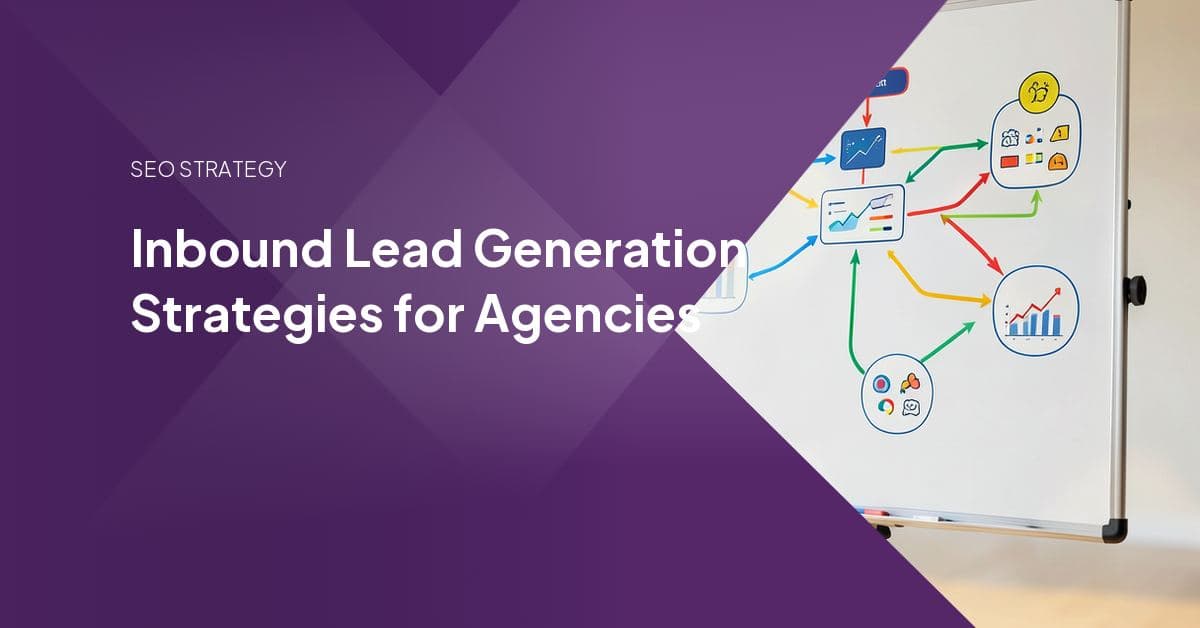
Inbound Lead Generation Strategies for Agencies
How agencies deliver and scale inbound lead generation for clients: content, SEO, landing pages, and nurturing, white-label under your brand.
Key Takeaways
- Package inbound lead generation as a monthly retainer, not a one-off project, since content, SEO, and nurture only compound when they run continuously.
- Content production and off-page SEO link-building are the two pieces agencies most commonly white-label, because both are capacity problems more than creative ones.
- Neil Patel found long-form content generates more than 9x more leads than short blog posts, so retainer production rules should prioritize depth over frequency.
- Rebuilding landing pages and forms around message match, one clear call to action, and purposeful media drove a 125% increase in new contacts for one healthcare-sector client.
- HubSpot's 2025 State of Sales Report found 35% of sales pros name social media as their top source of high-quality leads, so agencies should staff it as a demand channel, not just brand awareness.
Inbound lead generation is the service your clients keep asking for and the one that quietly eats your delivery capacity: content, SEO, landing pages, forms, and nurturing all have to run in concert before a single qualified lead lands in the CRM. For an agency, the strategy question is less "which tactics work" and more "how do we productize, staff, and set expectations for these tactics across a book of clients without drowning." This post is about the delivery side: packaging inbound lead gen, deciding what to keep in-house versus white-label, and managing the timeline conversation that makes or breaks the retainer.
The demand is not going anywhere. HubSpot reports that 30% of marketers still rank lead generation among their top challenges in 2026, which means most of your clients are walking in with the exact problem your inbound program is built to solve. The opportunity is real; the risk is committing to an inbound retainer you don't have the bench to deliver consistently.
How should agencies package inbound lead generation?
Package it as an ongoing program, not a project, because inbound compounds and clients who expect a one-time deliverable will churn before it pays off. The cleanest structure is a monthly retainer with a fixed content and optimization cadence (a set number of blog posts, landing page builds, email workflows, and reporting) so both sides know what "done" looks like each month.
Engagement models tend to scale in three steps as trust builds:
| Model | Best for | What the client buys |
|---|---|---|
| Pay-per-task | New clients, one-off builds | A specific deliverable (a landing page, a nurture sequence) |
| White-label retainer | Established programs | A fixed monthly cadence of content, SEO, and optimization |
| Reserved capacity | Multi-client agencies | Guaranteed delivery hours you can allocate across accounts |
The retainer is where inbound lives, because the tactics below only work when they run continuously. Reserved capacity, where a white-label partner holds a block of hours for you each month, is what lets you sell inbound to five clients at once without hiring five specialists. In our own delivery, one team member went "from a few leads a month to a few leads a week in just four months of work"; that curve is exactly why you sell the program on a horizon, not a launch date.
Content and blogging: the production engine you can white-label
Content is the core of every inbound program, and it is also the first thing that starves when your delivery team is stretched, which makes it the most common piece agencies white-label. High-quality, original content that solves a prospect's problem is what draws leads in without cold outreach or ad spend, but producing it on a reliable cadence across multiple clients is a capacity problem, not a creative one.
A few production rules to hold your program to:
- Answer real client questions. The best-performing posts respond directly to the questions a client's prospects actually ask. Mine the client's sales team and support tickets for topics.
- Prioritize depth over frequency. Neil Patel says long-form content generates more than 9x more leads than short blog posts, so one substantial, well-researched piece usually beats three thin ones.
- Build a historical-optimization loop. Refreshing older posts is one of the most cost-effective ways to lift leads; bake "update N existing posts" into the monthly retainer, not just "publish N new ones."
- Repurpose across formats. Turn one pillar post into social snippets and a short video. Video retains attention and gives your client's brand a human face, and it does not need studio production to convert.
For clients on HubSpot, drafting, publishing, and performance tracking all live in Content Hub, which keeps your delivery team in one system instead of stitching together a CMS and separate analytics.
SEO: the organic discovery layer clients pay for
SEO is what makes the content findable, and it is the layer clients most often underestimate. Organic discovery still drives real top-of-funnel demand: 32.9% of internet users aged 16+ discover new brands, products, and services via search engines, per DataReportal 2025 data cited on HubSpot's Marketing Statistics page. That is the audience your client's blog is competing for.
Split the work into two workstreams you can price and staff separately:
- On-page SEO: optimizing header tags, page URLs, titles, and image alt text; targeting one primary keyword per page; and keeping internal links relevant. This is systematic, repeatable, and easy to fold into a retainer.
- Off-page SEO: earning high-quality inbound links from reputable sites. This is slower and more relationship-driven, and it is a common candidate for white-label help because it needs specialist outreach time.
When you sell SEO, sell it as an ongoing refresh, not a one-time audit. Search behavior keeps shifting, and a client who expects rankings to hold without maintenance will blame the program when they slip.
Social media as a lead source
Social media is a genuine lead channel now, not just brand awareness, which reframes how you should pitch it to clients. 35% of sales pros name social media as their single top source of high-quality leads, per HubSpot's 2025 State of Sales Report, ahead of every other channel they named.
For delivery, that means treating a client's social presence as a demand source with two jobs: consistently publishing educational content that establishes authority, and engaging directly so real people show up behind the brand. Live video, stories, and short-form clips all work here, and none of them require polished production. The practical challenge is cadence: someone has to post and respond every week, which is exactly the kind of steady, low-drama work a white-label partner can own so your account team stays focused on strategy. (For a deeper play-by-play, see how to use social media effectively.)
Landing pages, forms, and CTAs: where visitors become leads
Landing pages are where an anonymous visitor becomes a known lead, so this is the highest-leverage thing to get right in the whole program. Every dollar of content and SEO effort routes through a form, and a weak page wastes all of it. Hold each landing page to a short checklist:
- Message match. The page must deliver exactly what the ad, post, or CTA promised. Any disconnect between the promise and the page breaks trust and tanks conversion.
- One strong headline. State the offer clearly and lead with the benefit to the prospect, not the feature.
- One call to action. Do not dilute the page with competing asks. Use specific, active language ("Download the guide") over generic buttons ("Submit").
- Purposeful media. Use video or images only when they actually help sell the offer, a product in action or a short explainer, never as decoration.
A strong call-to-action headline does a disproportionate amount of the conversion work, so it is worth testing more than almost anything else on the page. This is also where you can show delivery impact fast: in our delivery, a client in the healthcare sector saw a 125% increase in new contacts from their website after we rebuilt their pages and forms around these principles.
Email capture and lead nurturing
Email capture is how you keep the relationship alive after a visitor leaves, and it is the connective tissue between content and conversion. Most people will not hand over an email on the first visit, so the program needs a reason to convert: a genuinely useful lead magnet (an ebook, webinar, checklist, or free trial) gated behind a simple opt-in form.
Once a contact is in, nurturing does the slow work of turning interest into intent. Educational emails that keep delivering value earn the right to send the occasional promotional message; a stream of pitches empties the list. For HubSpot clients, this entire sequence (form, list, and automated nurture) lives in Marketing Hub, so your team can build workflows once and let them run while it focuses on strategy and reporting.
When should an agency outsource inbound delivery?
Outsource when demand for inbound outpaces your ability to staff it consistently, which, for a growing agency, is most of the time. Inbound is a stack of specialist skills (writing, SEO, design, automation, analytics) running on a relentless monthly cadence, and hiring a full in-house team for each one only pays off once you have the client volume to keep them busy.
White-labeling the delivery lets you sell the full program now and staff it later. A partner holding reserved capacity absorbs the production load (content, page builds, SEO maintenance, nurture workflows) under your brand, so your team keeps the client relationship and strategy while the throughput scales behind the scenes. For agencies whose clients live in HubSpot, that partner should know the platform cold: this is the model we run every day as a white-label inbound marketing partner and a Diamond HubSpot Solutions Partner, with 12,000+ projects and tasks completed and 70+ partner agencies served.
Setting client expectations: inbound is a longer game
Set the timeline expectation on day one, because inbound's biggest delivery risk is a client who expects leads overnight and cancels in month two. The compounding curve is real but gradual: content has to accumulate, SEO has to mature, and lists have to grow before the flywheel spins. Agencies that frame the first months as foundation-building (and report on leading indicators like traffic, rankings, and form starts rather than only closed leads) keep clients through the ramp and into the results. Measuring and communicating that progress well, using statistics that actually mean something, is often what separates a renewed retainer from a churned one.
Sources
Frequently Asked Questions
How do agencies price inbound lead generation for clients?
Agencies typically price inbound lead generation through three engagement models that scale with trust: pay-per-task for one-off builds, a white-label retainer for a fixed monthly content and SEO cadence, and reserved capacity that guarantees delivery hours across multiple client accounts.
What parts of inbound lead generation do agencies white-label?
Agencies most often white-label content production and off-page SEO link-building, since both require steady specialist capacity across many clients rather than a single creative push, letting the account team keep strategy and the client relationship in-house while a partner absorbs the production load.
How long does inbound lead generation take to produce results?
Inbound lead generation typically takes several months to compound, since content has to accumulate, SEO has to mature, and email lists have to grow before the flywheel spins. Agencies that report on leading indicators like traffic and rankings early keep clients through the ramp.
Why do landing pages matter so much for inbound lead generation?
Landing pages are where an anonymous visitor becomes a known lead, so message match, a single clear call to action, and purposeful media determine how much of the content and SEO investment actually converts. One healthcare-sector client saw new contacts rise 125% after a rebuild around these principles.
Is social media a real lead source or just brand awareness?
Social media is now a genuine lead source for agencies, not just brand awareness. HubSpot's 2025 State of Sales Report found 35% of sales professionals name social media as their single top source of high-quality leads, ahead of every other channel surveyed.
White-Label Digital Marketing
Full-Funnel Marketing Muscle, On Your Bench
End-to-end inbound and digital marketing, strategy to execution, delivered white-label or alongside your team.
Related Articles
AI-Powered Inbound Marketing for HubSpot Agencies
How agencies build AI into client inbound delivery and use white-label capacity to ship more without new headcount, from a Diamond HubSpot partner.