
Inbound Marketing
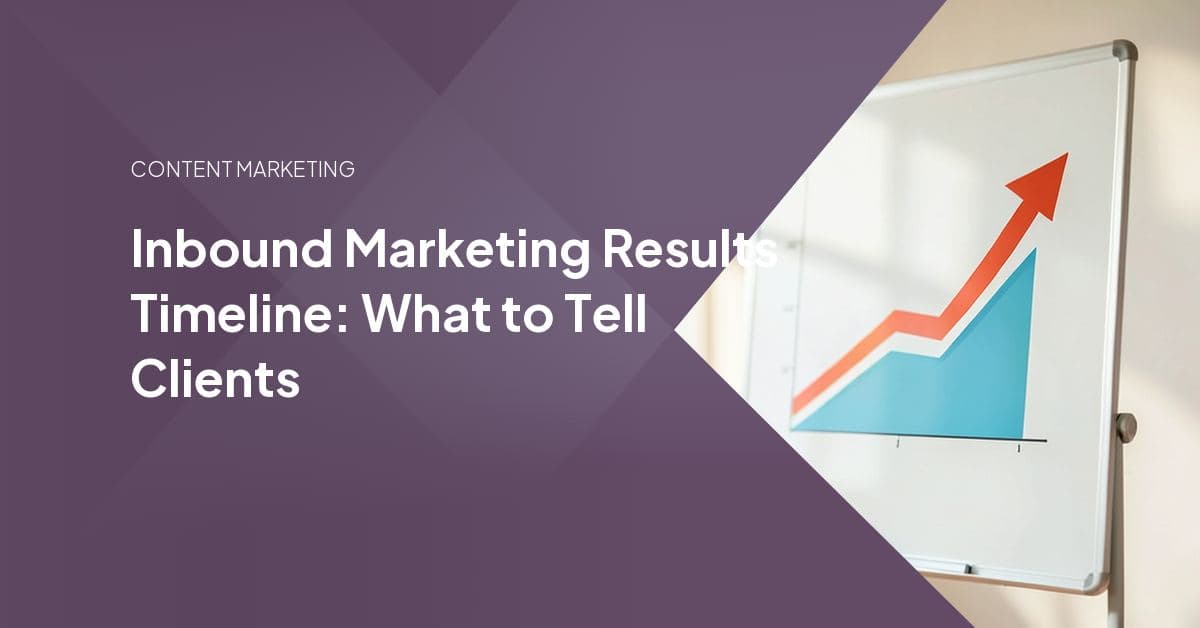
Inbound Marketing Results Timeline: What to Tell Clients
Inbound marketing usually takes 6–12 months to pay off. How agencies set client expectations and protect the retainer through the slow early ramp.

Key Takeaways
- Inbound marketing engagements typically need 6 to 12 months to produce meaningful ROI, with early lead lift sometimes visible sooner.
- The first three months of an inbound program usually show little more than traffic and engagement signals, before qualified leads pick up in months four through six.
- HubSpot customers acquire 129% more leads after one year on the platform, and 95% of customers achieve positive ROI, according to HubSpot's official ROI report.
- Pairing quick wins, like fixing a broken conversion path or optimizing a high-traffic page, with the long-term strategy gives clients visible progress during the slow early months.
- By the 12-month mark, consistent inbound content and social efforts have produced a 7:1 ROI in Meticulosity's own client work.
How long until a client sees results from inbound marketing?
Set the expectation at 6 to 12 months for meaningful ROI, with early lead lift often visible sooner. That single conversation (held before the contract is signed, not in month four when a client panics) is the most important thing an agency does on an inbound engagement. Inbound compounds; it does not switch on. The clients who churn are almost never the ones who saw slow results. They are the ones who were never told slow results were coming.
If you deliver inbound for other agencies' clients, or run it under your own brand, the timeline is your product's warranty. Get it right up front and the retainer survives the quiet early months. Get it wrong and you spend those months defending spend instead of building momentum.
The ramp curve to sell before kickoff
Map the engagement into three phases so the client knows what "on track" looks like at each checkpoint. This turns an anxious open-ended wait into a plan with milestones.
| Phase | What's happening | What the client should expect |
|---|---|---|
| Months 1–3 | Foundations: audit, tracking, buyer personas, content engine, quick-win fixes | Traffic and engagement signals, few or no closed deals |
| Months 4–6 | Volume: consistent publishing, offers, nurture, SEO indexing | Rising qualified leads, first pipeline influence |
| Months 7–12 | Compounding: ranked content, repeatable pipeline, optimization | Steady leads and demonstrable ROI |
The trap is the flat stretch in months one through three. In our own delivery we have watched a program produce almost nothing for two months and then hand a client their single biggest sales month in two years in month three, followed by an even bigger month four. That pattern is normal, but only a client who was warned about it reads it as the plan working rather than the plan failing.
We also lean on early quick wins to buy patience. Most sites carry low-hanging fruit: an under-optimized high-traffic page, a broken conversion path, a form nobody follows up on. Attack those in parallel with the long-term strategy and you can show a client traction while the compounding work is still building. A client who has never run proactive marketing usually has the most of this fruit, and the fastest early lift.
Protecting the retainer through the slow months
Build a client-facing reporting cadence that reframes the wait as progress, not silence. The gap that ends inbound engagements is rarely results; it is the absence of a story about results in the months before they arrive.
- Report leading indicators, not just closed deals. Impressions, rankings, sessions, and net-new contacts move first. Show them monthly so the client sees the engine warming.
- Name the flat stretch on day one. Tell them months one through three will look quiet, and why. When it happens, you predicted it.
- Bank a quick win to point to. One recovered conversion path or one page jump into the rankings gives the client something concrete to defend the spend internally.
- Keep the buyer journey in frame. In our experience, roughly three in four leads buy within 18 to 24 months: inbound is about becoming the trusted brand a prospect chooses when they are ready, not converting everyone this quarter.
For agencies, this is also where white-label delivery earns its keep. If your bench can keep publishing, nurturing, and reporting on schedule through the quiet months, the client never feels a gap, and you never have to choose between staffing the ramp and staffing your next new logo. Consistent delivery is what turns a nervous month-three client into a renewing month-thirteen one.
The proof that patience pays
The 12-month mark is where the numbers you promised finally land. One client we worked with described being six months into their largest marketing investment outside of payroll and thinking they had made a horrible mistake, then, in month seven, seeing "more traffic, more leads, more deals, and more sales than ever before." That turn is the rule, not the exception, when the work stays consistent.
Our own client data backs the curve: by the 12-month mark, we have seen a 7:1 ROI from steady inbound content and social efforts. The platform data points the same direction: HubSpot reports that its customers acquire 129% more leads after one year on the platform (HubSpot ROI report, 2025), and that 95% of customers achieve positive ROI across 268,000+ customers in 135+ countries. The compounding is real; it just does not happen on the client's preferred schedule.
If you want the specifics to hold up in a client review, dig into how you present those statistics so the timeline story lands, track every channel back to a source so early wins are attributable, and keep the social layer working while the SEO and content compound underneath it.
Delivering the timeline for your clients
There is no magic wand that makes inbound results arrive faster, but there is a repeatable way to deliver the ramp so clients stay the course. As a Diamond HubSpot Solutions Partner with 18 years as an agency and 12,000+ completed projects and tasks, Meticulosity runs white-label inbound marketing for agencies who want the delivery muscle without hiring the ramp. You keep the client relationship and the brand; we keep the engine running through the months that test everyone's patience.
Set the expectation, staff the ramp, report the leading indicators, and the 6-to-12-month payoff takes care of itself.
Sources
Frequently Asked Questions
How long does it take to see results from inbound marketing?
Inbound marketing typically takes 6 to 12 months to produce meaningful ROI, though early signals like traffic and engagement can appear within the first few months. The clearest gains usually show up between months seven and twelve, once content, SEO, and nurture programs start compounding together.
Why does inbound marketing feel slow in the first few months?
Inbound marketing feels slow at first because months one through three are spent building foundations, including audits, tracking, buyer personas, and a content engine, before volume and SEO indexing kick in. That flat stretch is normal, not a sign the strategy is failing.
How can agencies keep clients from churning during the slow ramp-up period?
Agencies can protect a retainer during inbound's ramp-up by naming the flat stretch before it happens, reporting leading indicators like traffic and net-new contacts monthly, and banking an early quick win the client can point to. That reporting cadence turns silence into visible progress.
What ROI can clients expect from inbound marketing after a year?
Clients can expect substantial ROI from inbound marketing after a year: HubSpot reports its customers acquire 129% more leads after twelve months on the platform, and Meticulosity's own client data shows a 7:1 ROI from steady inbound content and social efforts by the 12-month mark.
What's a quick win agencies can deliver early in an inbound engagement?
Agencies can deliver quick wins early in an inbound engagement by fixing an under-optimized high-traffic page, repairing a broken conversion path, or following up on a form that nobody currently monitors. These fixes give clients visible traction while longer-term content and SEO work compounds underneath.
White-Label Digital Marketing
Full-Funnel Marketing Muscle, On Your Bench
End-to-end inbound and digital marketing, strategy to execution, delivered white-label or alongside your team.
Related Articles
Inbound Lead Generation Strategies for Agencies
How agencies deliver and scale inbound lead generation for clients: content, SEO, landing pages, and nurturing, white-label under your brand.